


Power Sharing
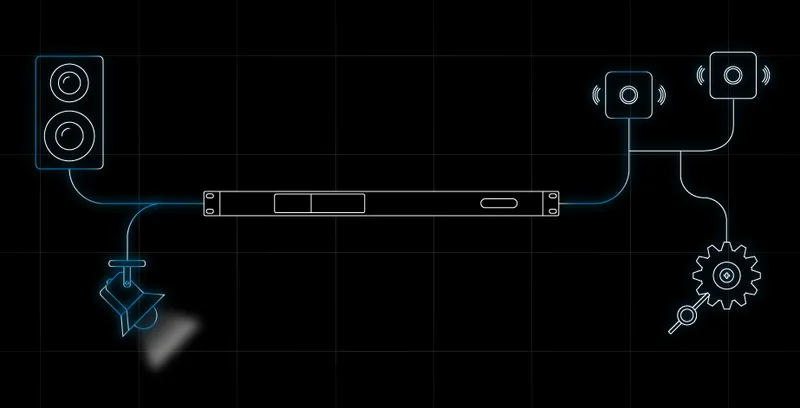
Power Sharing technology dynamically allocates amplifier power across multiple channels, efficiently managing asymmetric loads to optimize amplifier utilization.
Power Sharing enables part of the power to be shared across all output channels so that it can be used where it is needed the most. Available in all DSP-based amplifiers, and works even when channels are working at different impedances on the same unit. Power Sharing is engaged automatically and does not require any configuration from the user, although the correct load configuration must be connected to the amplifier and the correct limiters have to be set according to the design requirements.
How does Power Sharing work?
- Dynamic allocation — automatically redistributes unused power to channels needing additional headroom.
- Channel oversizing — due to the channel power capability, each channel can manage the total available energy, reaching extreme power sharing ratios.
- Instantaneous response — each channel is powered by a shared energy storage, allowing real-time power distribution to the output stages in direct response to varying power demands.
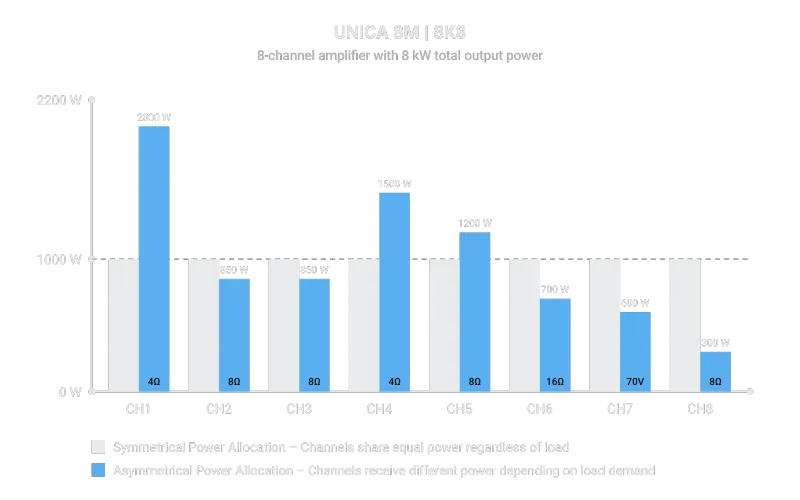
Key facts
- Automatically redistributes unused power to channels needing additional headroom.
- Each channel can manage the total available energy, reaching extreme power sharing ratios.
- Example: Unica 8M | 8K8, an 8-channel amplifier with 8 kW total output power.
What are the advantages of Power Sharing?
- Optimal efficiency — maximizes available power, reducing the total number of amplifiers required.
- Reduced equipment footprint — decreases rack space, weight and overall cost.
- Flexible application — ideal for complex setups involving multiple speaker zones.
More Technologies
Recycling EnergyPowersoft’s Recycling Energy technology recovers the energy generated by the speaker cone...Open →SRM Smart Rails ManagementPowersoft’s Smart Rails Management dynamically adjusts the amplifier’s voltage rails to...Open →Active Damping ControlWith modern systems growing larger in size, the resistance that is added by lengthy cable...Open →Alimentatore PFC Switch ModePowersoft è sempre stata molto attenta al risparmio energetico e il Power Factor...Open →